
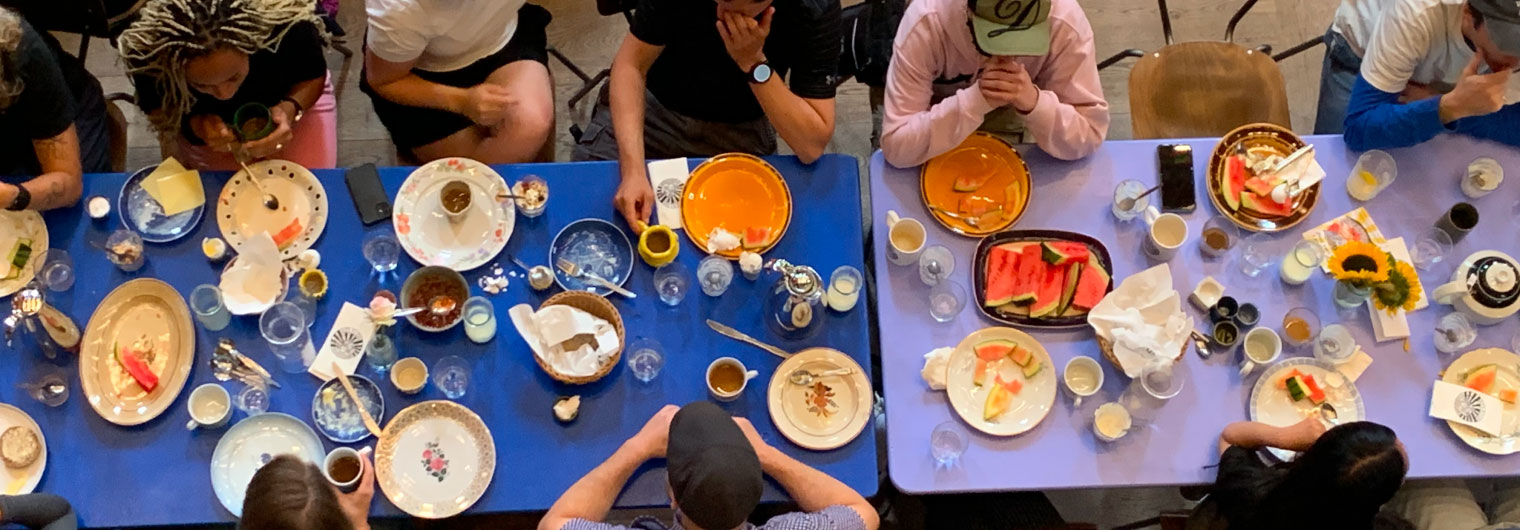
When we think of “Good Food,” we think of food that tastes good, is filling, and healthy. But also of production and distribution that are socially, ecologically, and economically sustainable, with fair incomes, a small ecological footprint, and viable financing models. With the addition “for All,” we focus on another social component: Who has access to high-quality, sustainable food and who doesn't? Why are less “good” options often not only cheaper but also more accessible and easier to integrate into everyday life? Let’s make good food more convenient! Or how about: Let’s make convenience food better!
For this Call, we do not treat good food primarily as a matter of individual choice. We view "Good Food for All" as a question of social infrastructure that connects health, justice, biodiversity, and climate.
Important levers include regionalization and solidarity-based business and procurement models. Others aim at changing offerings and eating habits, such as reducing animal products. Yet many promising models, including vegetable subscriptions, solidarity based agriculture, purchasing cooperatives, and nutrition funds, remain niche solutions. Even high potential approaches through canteens, school meals, catering, or subsidy reform often face structural barriers, conflicts of interest, and deeply rooted habits.
Together with One Planet Lab, we use this Mission as an experimental space for new forms of shared responsibility that can make good food for all the new normal.
We are particularly interested in regional teams from the public sector, market, and or civil society that jointly enable good food. This may include new funding models or stronger links between procurement systems and regional production and distribution.
We especially invite cantonal, city, and municipal administrations that want to leverage nutrition to achieve their climate and health goals, or that are already doing so. Researchers, pioneers, and niche initiatives are equally encouraged to contribute their knowledge and practical experience and to build partnerships for scaling their approaches.

We conduct interviews, gather online input, and host short workshops to jointly identify the core challenges within the Missions. For this, we bring together people and experiences from practice, research, and administration. The goal is to build a shared understanding of the problem and to formulate clear challenges as the starting point for solution development.
You can participate in two ways. Either attend a workshop or complete the following form.
How can we develop concrete solutions that embed good food for all as part of our social infrastructure?
As part of the FUS Ideation process, we build on the challenges and insights identified earlier to develop initial viable solutions. The focus is on social innovations that enable new forms of collaboration and effectively enhance existing structures, particularly in areas related to access, accountability, and institutional embedding.
To achieve this, we bring together people from the public sector, the private sector, and civil society; we test and connect ideas; and we support the formation of new partnerships and teams. The goal is to develop a robust project idea with a clear connection to the identified challenges, suitable partners, and realistic next steps toward implementation and potential funding.
Further information regarding the process, eligibility requirements, and next steps will be published in mid-April following the conclusion of the problem exploration phase (Call for Challenge).
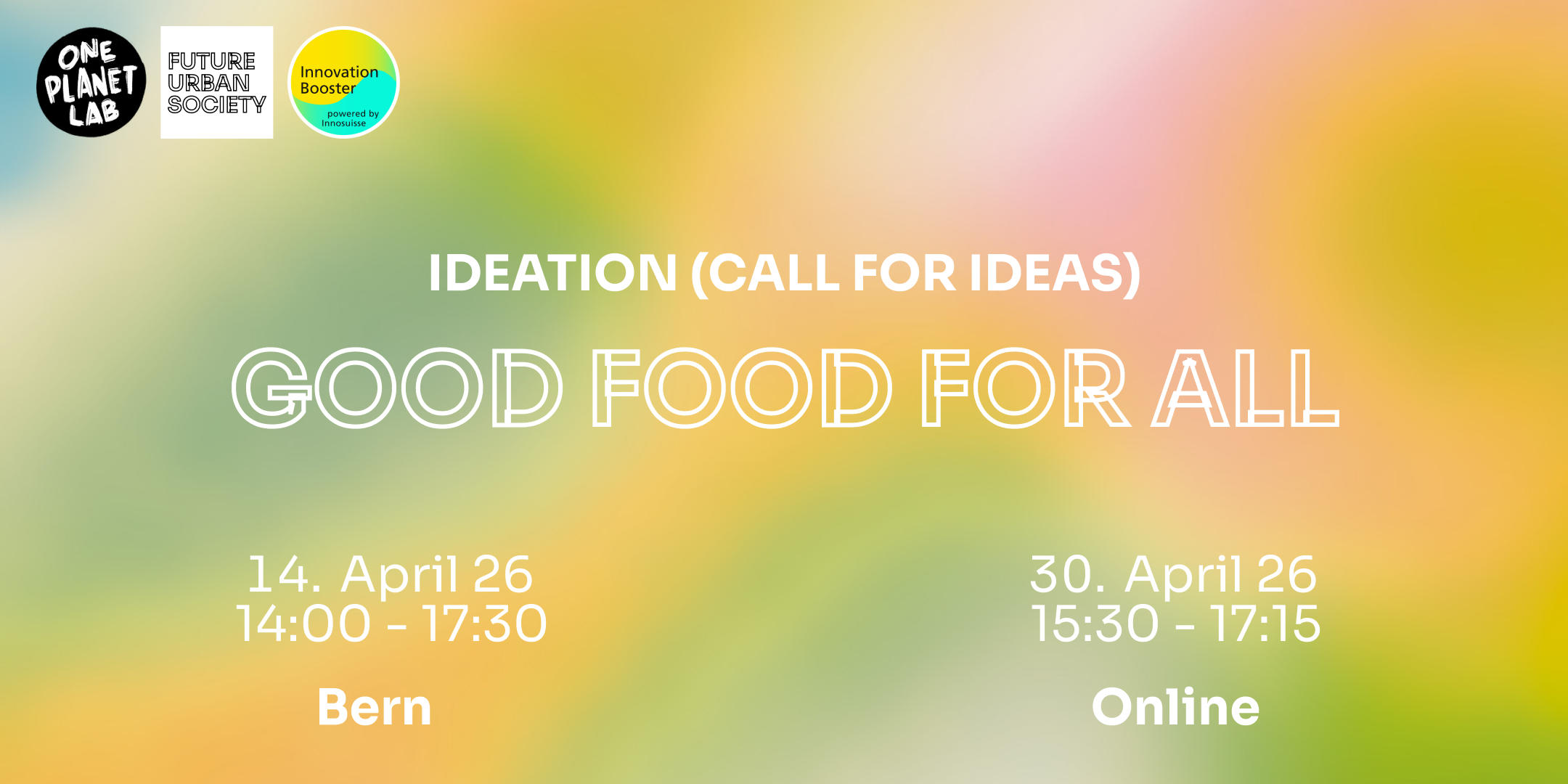
📅 April 14, 2026, 2:00 PM to 5:30 PM
📍 Bern
📅 April 30, 2026, 3:30 PM to 5:15 PM
📍 Online
