

What deeper problem are you addressing?
Despite comprehensive national dietary recommendations (BLV, 2025) and high public awareness, vegetable consumption in Switzerland remains below recommendations and even declines. This suggests that information alone is not the primary constraint; rather, behavioural, economic and contextual factors shape dietary outcomes.
The underlying issue lies in the interaction of access, affordability, and food-related habits, particularly among socioeconomically disadvantaged groups. Empirical evidence across Europe shows that insufficient fruit and vegetable consumption is strongly associated with low income, lower education levels, and specific socio-demographic profiles (Goryńska-Goldmann et al., 2023). This reflects a deeper systemic issue: nutrition outcomes are socially stratified, and current food systems reinforce rather than reduce these inequalities.
This dynamic is further amplified by a self-reinforcing poverty–malnutrition cycle (Siddiqui et al., 2020): limited financial resources reduce access to healthy food, while poor nutrition constrains long-term health and economic participation. As a result, affected populations face persistent structural disadvantages that cannot be overcome through information campaigns or individual responsibility alone.
Existing experimentation with solutions such as vegetable box subscriptions demonstrates that increased availability can temporarily improve consumption (Craveiro et al., 2021). However, these effects are often not sustained, as they fail to address affordability and long-term habit formation (Huyard, 2020). Coordinated approaches targeting access, affordability, and behaviour simultaneously are required.
We frame the deeper problem as a misalignment between public health goals and current incentive structures in the food system. Healthy nutrition is treated as a private good, leading to unequal access, instead of being supported as a public good with societal returns.
Which habits or practices do you want to change — and how?
We aim to change everyday food-related habits, in particular: low and irregular vegetable consumption and preference for convenience foods over balanced meals by integrating vegetables into daily diets through increasing access and establishing routines for planning and preparing healthy food. We will be focusing on socioeconomically disadvantaged groups, where financial constraints, limited access, and low perceived feasibility of healthy eating shape daily decisions (e.g., Rossi et al., 2026). Our approach to changing these habits combines structural and behavioural intervention, in alignment with the COM-B model for behavioural change (standing for capability – opportunity - motivation -> behaviour (Michie et al., 2011)):
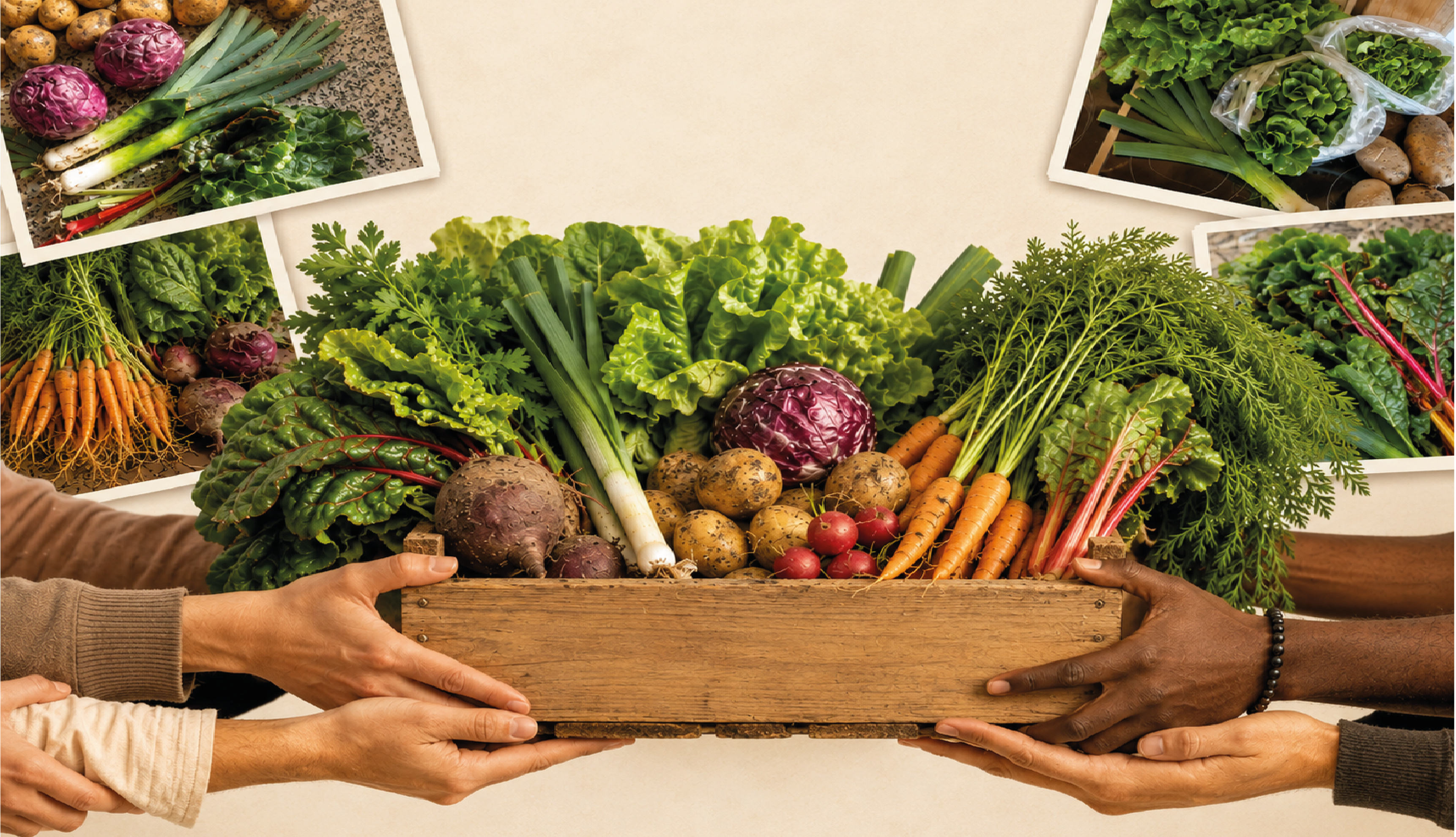
- Price-supported vegetable box subscriptions increase the physical presence of vegetables in households. It increases the “opportunity” for change by making healthy choices the default rather than the exception. By identifying ways to reduce access barriers, we enable households to integrate vegetables into their regular consumption patterns, rather than treating them as optional or occasional.
- Regular deliveries create predictable consumption cycles, enhancing beliefs about capabilities (“motivation” factor), thereby supporting the development of stable habits over time rather than one-off behaviour change.
- Complementary measures such as providing recipes, cooking guidance, focus group discussion and common food preparation help translate availability into actual consumption and build routine-based practices. It increases the “capability” factor.
Our intervention moves the perception of vegetable consumption from occasional, effortful, and cost-sensitive towards routine-based, accessible, and normalized. By embedding vegetables into everyday routines and reducing cognitive, financial, and practical barriers, we aim to transform individual habits at scale and contribute to a broader shift in societal eating practices.
What do you want to work on during the booster — and what do you want to find out?
During the 6 months of the Innobooster, we will:
- Carry out an exploratory pre-study, combining qualitative interviews with beneficiaries of the KulturLegi-supported vegetable box subscription (offered by SoLaWi Pura Verdura) and a focus group discussion organized in collaboration with Caritas. The aim is to better understand the barriers to vegetable consumption within the target group, as well as to gather their ideas and recommendations. Building on these insights, we plan to co-develop a set of measures designed to support the most disadvantaged households in changing their food consumption habits. This will involve systematically developing interventions that address the different components of the COM-B model. We also aim to assess which measures are perceived as attractive and feasible by the involved partners. (Learning step: WHAT?)
- In parallel, we will estimate the costs of implementing a full-scale project. (Learning step: HOW MUCH?)
- Finally, we will establish the necessary partnerships for a full-scale experiment in up to three municipalities (e.g., Basel, Winterthur), including collaboration with municipalities, health insurers, and providers of vegetable box subscriptions. This step aims to assess the willingness of key stakeholders to participate, clarify their potential roles, and explore possibilities for financial contributions. (Learning step: WHO & HOW?)
We are already in contact with foundations for the full-scale project.