

What deeper problem are you addressing?
While the new Electricity Act (2026) legally enables Local Energy Communities (LECs), a critical structural barrier remains: the human governance gap. Currently, launching an LEC relies heavily on volunteer enthusiasm or expensive external consultants. This will probably lead to projects that either never start due to administrative complexity, or they remain isolated initiatives dependent on a few overburdened individuals.
Consequently, three systemic issues arise:
1. Exclusion: Tenants, low-income households, and non-tech-savvy citizens are de facto excluded because there is no trusted local intermediary to guide them.
2. Fragility: Communities collapse if the key volunteer leaves, lacking professional continuity.
3. Non-Replicability: The lack of a standardized operational role prevents scaling beyond early adopters.
We address the hypothesis that energy communities cannot scale nationally without the local management layer. The technology exists; the missing link is a dedicated, trained human role that bridges the gap between complex regulations/technical tools and the daily reality of residents. Without this "social infrastructure," the legal framework alone will not achieve the intended energy transition targets.
Which habits or practices do you want to change — and how?
We aim to fundamentally shift energy community management from a voluntary, ad-hoc activity to a recognized local profession. Currently, residents face a "participation barrier": they either remain passive consumers or must become amateur energy experts to join a community. This reliance on unpaid volunteers creates fragility and excludes those without time or technical skills.
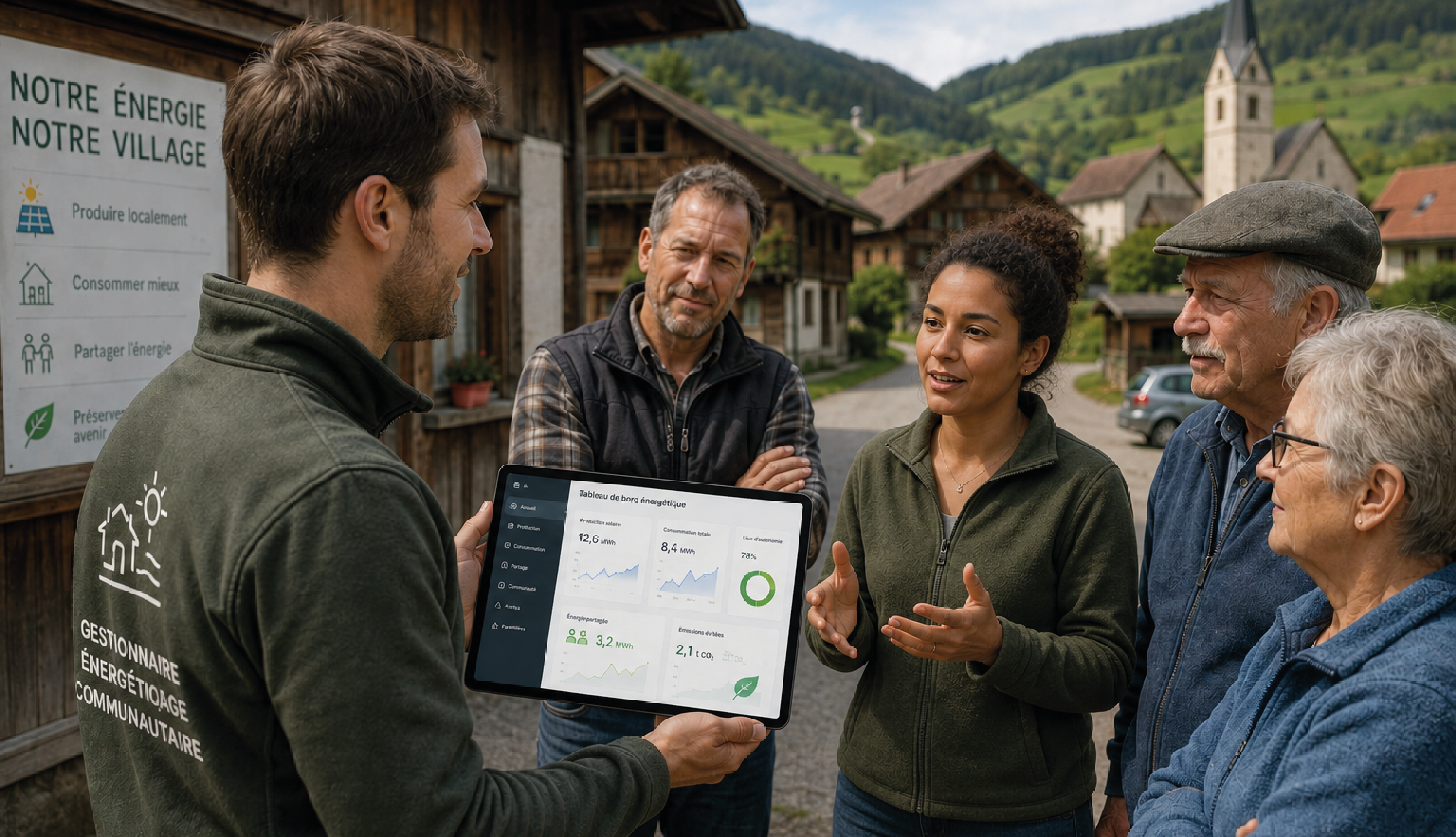
We propose replacing this fragile volunteer model with a professional "Community Energy Steward" embedded in each neighborhood. In addition, we want to develop a central platform to support and assist stewards in their work. This changes daily practices in three ways:
- From passive to guided participation: Instead of navigating complex regulations alone, residents interact with a trusted, trained local expert who simplifies decisions and ensures inclusive access for tenants and low-income households.
- From fragmented to standardized governance: We replace isolated, reinvented-by-each-project rules with a replicable framework. A central non-profit entity (Modener Association) provides the legal backbone, digital tools, and certified training, while local communities retain autonomy over their specific energy choices.
- From technical burden to social facilitation: The Steward's role is not just technical; it is social. They facilitate democratic decision-making, manage administrative compliance, and animate the community, turning energy sharing into a tangible social link rather than a bureaucratic hurdle.
Our Approach:
- Co-create the role: Define the Steward's profile, training curriculum, and legal status through Living Lab workshops with future stewards, residents, and legal experts.
- Empower via tools: Develop digital governance tools (open source) that allow Stewards to manage communities efficiently without needing deep technical expertise.
- Validate the economic model: Test a remuneration scheme where the community pays the Steward from generated savings, creating a sustain
What do you want to work on during the booster — and what do you want to find out?
During the 6-month booster, we will focus on defining the structural conditions for the "Community Steward" role and validating the governance model through our Living Lab partnership (Energy Living Lab @HES-SO):
WP1 : Co-define the steward profile and framework:
- T1.1 (ELL) : Conduct participatory workshops to outline the core competencies, mission scope, and optimal legal status (freelance, employee, or cooperative member) for the Steward.
- T1.2 (Modener) : Draft a legally valid contract template.
WP2 : Prototype the governance tools:
- T2.1 (Modener) : Develop the core "Community Management" module on the platform (Frappe/ERPNext), enabling basic democratic functions (voting, transparent communication) and administrative tracking needed for a Steward to operate.
WP3 : Validate acceptability and identify barriers:
- T3.1 (ELL) : Conduct structured interviews and polls with key stakeholders (municipal energy officers, existing communities, housing association reps) using the drafted contracts and tool prototypes to uncover practical deal-breakers (e.g., liability fears, mistrust of central authority, confusion over roles) before any real-world deployment.
- T3.2 (Modener) : Test the platform in two existing energy communities (Evionnaz and Autigny).
Key hypotheses to test:
- Feasibility hypothesis: A clear legal status and standardized training can be defined for the Steward role within the current Swiss regulatory framework (OApEI, Labor Law).
- Governance fit hypothesis: The proposed model (central non-profit providing tools/training + local community retaining autonomy) is legally robust and socially acceptable to both municipalities and residents.